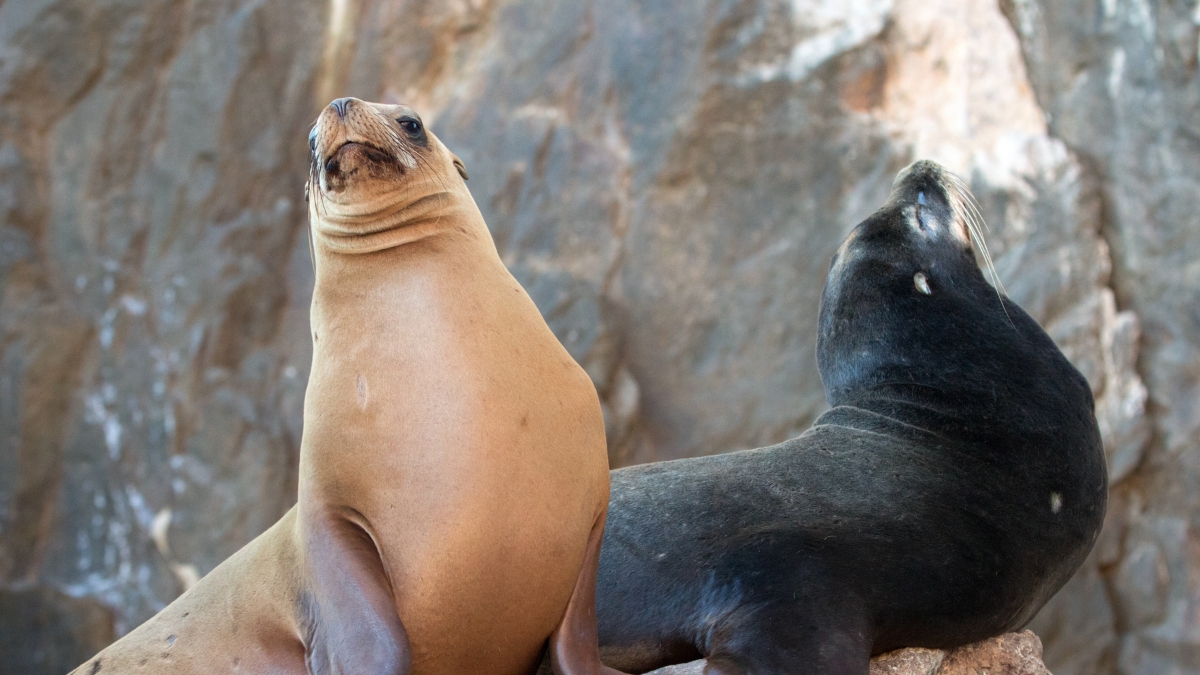
At Cabo’s sea lion rocks, you may see animals sleeping, barking, shifting position or slipping back into the water. These are wild animals using a resting place, not a scheduled show. Watching without interrupting them gives you a better view of their natural behavior.
For the wider visitor overview, see Cabo San Lucas sea lions. This page explains what you might notice and how to avoid disturbing it.
Resting on the rocks
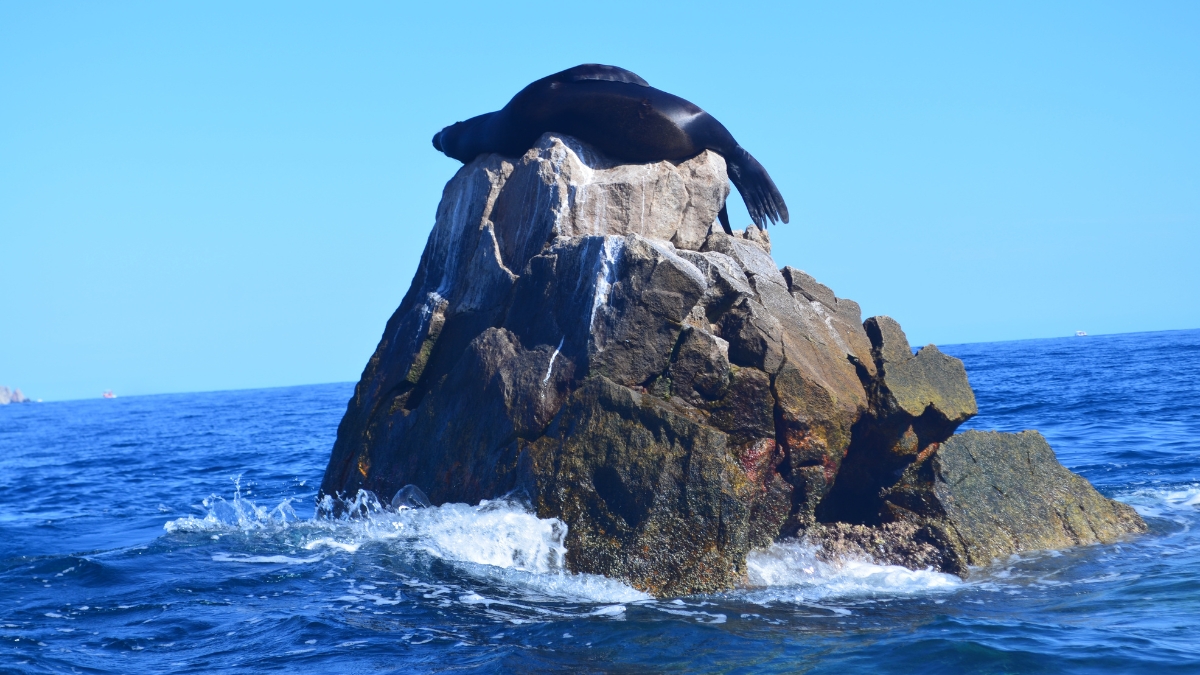
Sea lions spend time out of the water resting. Groups can lie close together, and an animal that appears inactive may simply be resting. There is no need to call, clap or encourage movement to make the visit more interesting.
The rocky gathering is a haul-out: a place where animals leave the water. A group resting together should not automatically be interpreted as a breeding colony, or as one male overseeing a fixed group of females and pups.
Barking and social interactions
Barks are part of sea lion communication. You may also notice changes in posture, head movements and animals jostling for space. A brief boat visit does not give enough context to interpret every interaction as play, aggression or mating.
California sea lions can be territorial at breeding sites. That species-level behavior does not mean visitors should expect breeding activity at Cabo’s viewing rocks on a particular trip. Never approach an animal to test whether it is friendly.
Feeding and time away from the rocks
Sea lions feed at sea, including on fish and squid, and spend part of their time away from the haul-out. Food availability and environmental conditions influence their movements. A protected location does not guarantee a constant food supply or a fixed number of animals.
This helps explain why the same viewing spot can look different between visits. A quiet or nearly empty rock is not, by itself, evidence that anything is wrong. Ask your guide about recent local observations rather than expecting the animals to follow a timetable.
Watching behavior underwater
The video below provides an underwater view. Behavior in a video is an example, not a guarantee of how a wild animal will respond to a visitor. Let animals choose their own route and never pursue them for a closer look.
Video: Cabo Private Guide
Signs that your presence may be disturbing an animal
If an animal repeatedly turns toward you, changes position or moves away as you approach, give it more space and follow the guide’s instructions. Do not wait for an obvious reaction before keeping your distance. Avoid feeding, touching, chasing or blocking access to the water.
An animal approaching a boat is still wild. Keep hands and food to yourself, stay aboard unless an activity has been specifically arranged and follow instructions if an animal comes near.
Put the observations into your visit
Our colony location and access guide explains where the viewing stop is. The sea lion tour-selection guide helps you choose an outing that allows observation without promising contact or a particular number of animals.