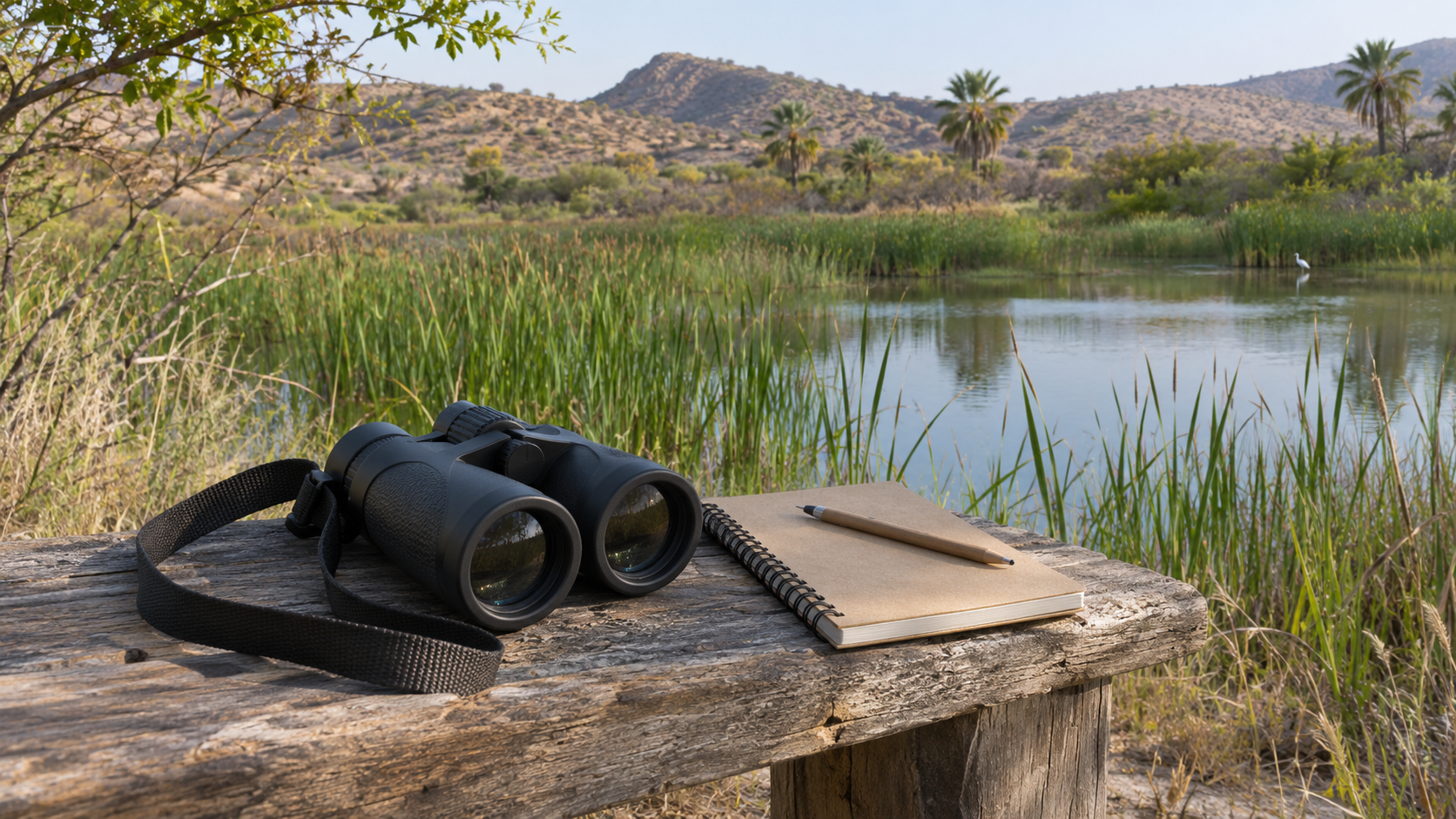
Choose San José Estuary for a birdwatching outing close to San José del Cabo’s town and hotel area. Choose Boca de la Sierra when you want a dedicated countryside visit around Miraflores and the Sierra de la Laguna foothills. Both involve water and vegetation, but the setting, travel and visiting arrangements make them different days.
Our Los Cabos birdwatching guide introduces the wider region. This comparison helps you choose between a town-side wetland and an inland stream-and-foothill setting, rather than trying to rank them by a promised number of birds.
San José Estuary: a wetland near town
San José Estuary is a protected wetland in San José del Cabo. The municipal ecology department identifies it as a state ecological reserve and a place for environmental education. For visitors already staying in San José, the town-side setting can make it a practical starting point when planning a shorter nature outing.
Choose it when you want time around wetland vegetation and open-water edges without making a countryside excursion the main purpose of the day. Agree on the actual meeting point and walking route. Being near town does not establish that every path is open or suitable for every visitor.
Ask about current access, surface conditions and any temporary restrictions. If you need a route without steps or with regular places to rest, describe that need directly. Avoid assuming that a short walk on a map is an accessible route on the ground.
Boca de la Sierra: water and trees in the foothills
Boca de la Sierra lies in the Miraflores delegation at the foot of the Sierra de la Laguna reserve. Municipal information describes a lake formed by the San Bernardo stream, surrounded by trees. Its appeal is the inland combination of water, vegetation and the dry landscape around it.
Choose Boca when a rural setting is part of what you want from the outing. Allow for the drive from your accommodation, the final approach and time at the observation area. Confirm the exact destination with your host or guide so a general place name does not become a wrong turn at the end of the journey.
An outing around the water is different from a mountain trek. Ask what terrain the proposed walk actually covers and whether any part of it crosses land requiring permission. A photograph of a canyon or pool is not a map of the route you have arranged.
Which setting fits the day you have?
| Choose San José Estuary when… | Choose Boca de la Sierra when… |
|---|---|
| You want to build a shorter outing around a San José del Cabo stay. | You want a dedicated inland outing in the Miraflores area. |
| Your main interest is a town-side wetland setting. | You want streamside vegetation and a foothill landscape. |
| You prefer to confirm a local meeting point and return to town afterward. | You are arranging the countryside drive, final approach and return as part of the day. |
If you have limited time, choose one setting and spend longer observing. Visiting both adds travel and can reduce the quiet time you wanted in the first place. Compare the actual walking and driving programme before deciding that a longer booking offers more birdwatching.
What birds might you see?
Both settings have documented birdwatching activity. In February 2025, UABCS reported observation events at Boca de la Sierra and San José Estuary, recording aquatic birds and other regional species. Those dated observations demonstrate the value of the habitats; they are not a current visitor checklist or a forecast for your morning.
Use our six birds to look for in Los Cabos as an introduction to observation clues. Ask a local guide which species and habitats fit your dates. Water levels, season and bird movement can change the experience, so a quieter visit should not be judged solely by the size of a species list.
Independent visit or a birdwatching guide?
Our birdwatching tour-choice guide explains the questions to ask about terrain, equipment and pace. For this comparison, the key question is where the actual departure goes. A general Los Cabos tour title does not confirm a visit to either location.
A guide can help with identification and local route knowledge, especially when your time is limited or you want to understand a particular habitat. Confirm transport, binoculars, walking demands and the return time. If visiting independently, establish access and your route before leaving, with a return arrangement that does not depend on an assumed taxi at a rural entrance.
Make the observation time count
Bring binoculars if you have them, water, sun protection and footwear suited to the confirmed route. Choose a manageable stretch and pause often. Watching one bird feed or move between perches can teach you more than continually walking to the next viewpoint.
Stay on permitted routes, leave vegetation and nesting areas undisturbed, and take rubbish away. Keep conversation quiet and give birds space to feed or rest. A successful outing can be a comfortable introduction to a habitat, whether you choose the estuary near town or a morning inland at Boca de la Sierra.
Find more places in the At Los Cabos app.
Sources: the Los Cabos municipal ecology department’s descriptions of both settings, UABCS’s February 2025 wetland birdwatching report, and the Los Cabos Tourism Board’s birdwatching resources. Reviewed 7 November 2026. The university report records a past educational event, not a current tour schedule.