Your first birdwatching outing in Cabo can be simple: one accessible setting, time to pause and a willingness to notice what the birds are doing. Start with the experience rather than a target number of species. A familiar bird seen clearly can be more satisfying than a long list of uncertain names.
Start with a manageable place
Choose a route that suits your walking ability and the time available. You may prefer a short shore visit to a full day in the mountains. Our Los Cabos birdwatching guide compares the wetland, streamside and rural settings.
Confirm which route is open and where you will meet or park. Decide how long you want to be outdoors before adding lunch or other stops. For a first outing, one main location leaves room to learn without watching the clock.
What to bring
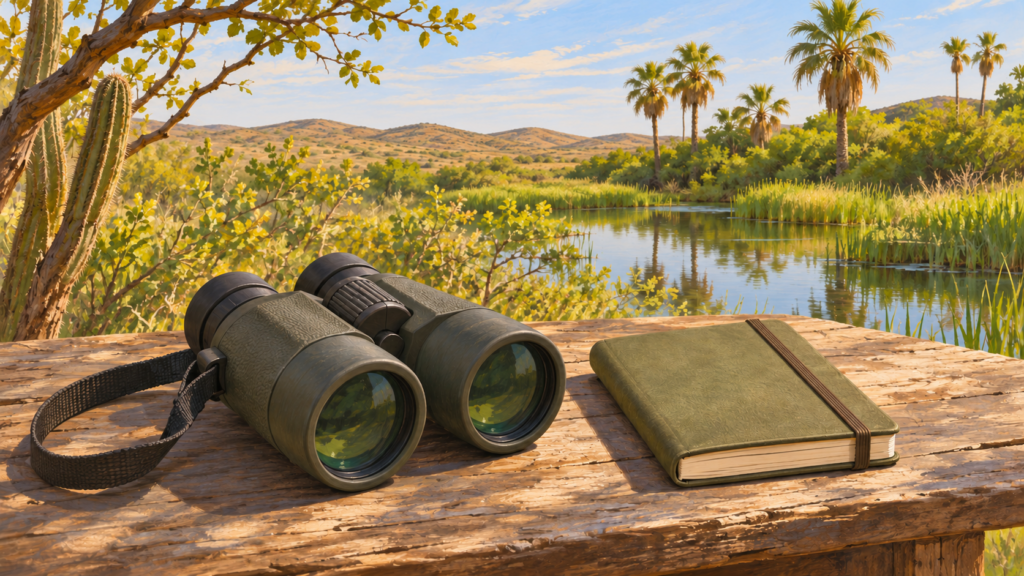
Bring binoculars if you have them, a region-appropriate field guide or identification app, water, sun protection and comfortable footwear. A small notebook can hold the place, date and details of birds you want to identify later. Ask a guide whether shared optics are supplied before buying equipment for one holiday outing.
Use binoculars that feel comfortable to hold and focus. Practise on a stationary object before searching the trees. Look at the bird with your eyes first, then bring the binoculars up while keeping your gaze on that point. Stop walking before raising them.
Observe before trying to name the bird
Notice size, outline, colour pattern, movement and habitat. Is it walking at the water’s edge, probing a trunk or sitting on an exposed branch? Those details can be more useful than a fleeting impression that the bird was “brown.”
Make short notes while the view is fresh. A quick sketch or a photograph taken from a respectful distance may help later. Leave an identification uncertain when you cannot see enough; you do not have to name every bird to enjoy the outing.
Use a phone as a learning aid
Prepare your guide or app before leaving, especially if connectivity may be limited. Explore its identification features at home so you spend less of the outing navigating menus. Keep enough battery for your route and transport arrangements.
An app suggestion is a starting point to compare with the bird, the place and what you actually observed. Listen quietly to the surroundings. Avoid playing calls into the habitat to bring birds closer.
Give birds room
Watch from the established route and let the birds continue feeding, resting or moving naturally. If a bird changes its behaviour because of you, increase your distance. Do not follow a bird repeatedly to improve a photograph.
Leave nests and young birds alone. Keep voices low and avoid sudden movements around a watching group. A better view through binoculars is preferable to stepping into reeds, vegetation or a protected area.
A simple first-morning routine
Before leaving: confirm the route and pack lightly. On arrival: pause and listen before moving. During the visit: choose a few birds to watch carefully and note their behaviour. Afterwards: review your notes and look up what interested you most.
Keep a comfortable pace, with breaks appropriate to the weather and your group. An early start often suits outdoor observation, but the route and conditions matter more than an inflexible timetable. See our guide to the best time for birdwatching in Los Cabos for seasonal planning and recent-record checks.
Would a guide help?
A patient guide can help you locate birds, use binoculars and understand calls without turning the outing into an identification test. Tell the provider you are new to birding and ask whether the trip is designed for learning or for experienced birders pursuing particular species.
Our birdwatching tour comparison guide explains the questions to ask before booking. Choose the pace and setting that make you want to keep looking.
Browse more places in the At Los Cabos app while planning your stay.
Further reading: the Cornell Lab’s beginner tips, National Park Service birding introduction and Audubon’s ethical photography guidance.